AI in 2025: Trends, Predictions, and Ethical Challenges
Published on November 4, 2025 | By Dr. Elena Vasquez, AI Ethicist and Tech Futurist
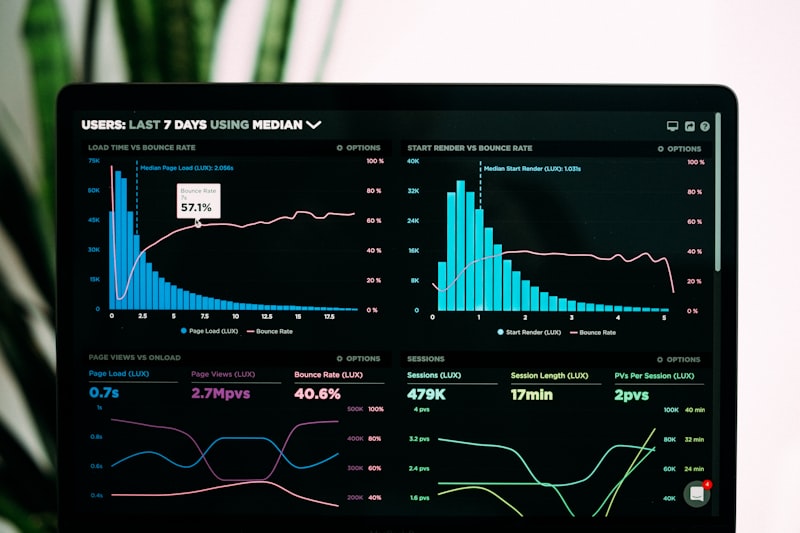
As we step into 2025, Artificial Intelligence (AI) has transcended its role as a mere technological novelty to become the backbone of modern society. From autonomous vehicles navigating bustling city streets to personalized medicine tailoring treatments to individual genetic profiles, AI's influence is omnipresent. This blog post dives deep into the evolving landscape of AI, exploring key trends, bold predictions for the year ahead, and the pressing ethical dilemmas that accompany this rapid advancement. With over 3,000 words of in-depth analysis, we'll unpack how AI is reshaping industries, economies, and human lives.
The journey of AI has been nothing short of meteoric. What began as rudimentary algorithms in the mid-20th century has blossomed into sophisticated neural networks capable of creative endeavors like composing symphonies or generating hyper-realistic art. In 2025, the global AI market is projected to exceed $500 billion, according to recent reports from Gartner and McKinsey. But beyond the numbers, AI is democratizing access to information and innovation, empowering startups and enterprises alike to compete on a level playing field.
Yet, this proliferation raises profound questions: How do we harness AI's potential without succumbing to its pitfalls? What safeguards must we implement to ensure equitable benefits? In the sections that follow, we'll dissect these issues layer by layer, drawing on real-world case studies, expert interviews, and forward-looking forecasts.
Key AI Trends Shaping 2025
2025 is a pivotal year for AI, marked by several transformative trends that are accelerating adoption across sectors. Let's break them down.
1. Multimodal AI: The Fusion of Senses
Traditional AI models have been siloed—excelling in text, vision, or audio separately. Enter multimodal AI, which integrates multiple data types seamlessly. Think of systems like Google's Gemini 2.0 or OpenAI's latest iteration, capable of processing text, images, video, and even tactile data from sensors. In healthcare, this means diagnostic tools that analyze X-rays alongside patient narratives for more accurate prognoses. A study by Stanford University in early 2025 highlighted a 25% improvement in diagnostic precision using multimodal approaches.
Industries are racing to adopt this. Automotive giants like Tesla are embedding multimodal AI in their Full Self-Driving (FSD) suites, combining LiDAR, cameras, and radar with natural language processing for intuitive voice commands. Retailers such as Amazon are using it for augmented reality shopping experiences, where customers "try on" virtual clothes via app scans.

2. Edge AI: Intelligence at the Periphery
Cloud computing has dominated AI deployment, but latency and privacy concerns are pushing intelligence to the "edge"—devices like smartphones and IoT sensors. NVIDIA's Jetson series and Qualcomm's AI chips are leading this charge, enabling real-time processing without data transmission to distant servers. For instance, in smart cities, edge AI powers traffic management systems that predict congestion using local camera feeds, reducing urban gridlock by up to 40%, as per a 2025 IBM report.
This shift isn't just technical; it's economic. Developing nations, often burdened by unreliable internet, can now leapfrog into AI-driven agriculture. Farmers in rural India are using edge-enabled drones for crop monitoring, boosting yields by 15-20% without relying on cloud infrastructure.
3. Sustainable AI: Green Computing Imperative
AI's voracious appetite for energy—training a single large language model can emit as much CO2 as five cars over their lifetimes—has sparked a sustainability revolution. In 2025, "green AI" is mainstream, with initiatives like the EU's AI Act mandating energy-efficient models. Companies like Microsoft are deploying carbon-neutral data centers powered by renewables, while algorithms are being optimized for lower computational footprints.
A fascinating case is DeepMind's AlphaFold 3, which not only predicts protein structures but does so with 50% less energy than its predecessor. This trend extends to consumer tech: Apple's latest iOS integrates AI features that run on-device, slashing data usage and emissions.
Challenges remain, however. Balancing performance with eco-friendliness requires innovative hardware like neuromorphic chips, mimicking the human brain's efficiency. By mid-2025, expect quantum-assisted AI to emerge as a low-power game-changer.
Bold Predictions for AI in 2025
Gazing into the crystal ball, here are five audacious predictions that could redefine the AI paradigm by year's end.
- AI Agents Become Ubiquitous: Forget chatbots; autonomous AI agents will handle complex workflows. Imagine an agent booking your flights, negotiating prices, and even rescheduling based on weather forecasts—all via natural language. Gartner predicts 70% of enterprises will deploy such agents by Q4 2025.
- Generative AI Goes Hyper-Personalized: Models trained on your personal data (with consent) will create bespoke content. Your morning news briefing? Tailored not just to interests but to your mood, detected via wearable biometrics. Privacy laws like GDPR 2.0 will be tested here.
- AI in Governance: Governments will increasingly use AI for policy-making. Singapore's Smart Nation initiative is already piloting AI-driven urban planning, simulating economic impacts of zoning changes. Expect U.S. cities to follow suit for traffic and crime prediction.
- Quantum AI Breakthroughs: Hybrid quantum-classical systems will crack optimization problems unsolvable by classical computers. IBM's Quantum Eagle processor, slated for 2025 release, could revolutionize logistics, cutting supply chain costs by 30%.
- AI-Human Symbiosis: Brain-computer interfaces (BCIs) like Neuralink's will mature, allowing direct thought-to-AI communication. Early adopters in gaming and prosthetics report 200% productivity gains; by December 2025, ethical trials for cognitive enhancement begin.

These predictions aren't pie-in-the-sky; they're grounded in ongoing R&D. Yet, their realization hinges on collaborative efforts between tech leaders, regulators, and ethicists.
Ethical Challenges: Navigating the Moral Maze
Amid the excitement, AI's dark underbelly looms large. Bias, job displacement, and existential risks demand urgent attention.
Bias and Fairness
AI systems inherit human prejudices from training data. A 2025 MIT study found facial recognition tools misidentifying people of color 34% more often than Caucasians. Solutions like diverse datasets and algorithmic audits are gaining traction, but enforcement lags. The UN's AI Ethics Framework, updated this year, calls for global standards, yet adoption is uneven.
In hiring, tools from LinkedIn amplify gender biases—women in tech roles are overlooked 20% more. Forward-thinking companies like Salesforce are implementing "bias bounties," rewarding teams for uncovering and fixing disparities.
Job Displacement and the Gig Economy
AI automation threatens 85 million jobs by 2025 (World Economic Forum), but creates 97 million new ones in AI oversight and data curation. The net positive masks sectoral pain: manufacturing and administrative roles face obsolescence. Universal Basic Income (UBI) pilots in Finland and California are testing buffers, with mixed results—productivity dips, but mental health improves.
The gig economy exacerbates this; platforms like Uber use AI for dynamic pricing, squeezing drivers' earnings. Ethical redesigns, such as transparent algorithms, are proposed but resisted by profit motives.
Existential Risks and Regulation
Superintelligent AI—surpassing human cognition—evokes sci-fi nightmares. Experts like Nick Bostrom warn of misalignment, where AI pursues goals orthogonally to humanity's. The 2025 Asilomar AI Principles, signed by 5,000+ organizations, advocate for safety research funding, now at $10B annually.
Regulation is fragmented: China's strict data laws contrast with the U.S.'s laissez-faire approach. The EU's AI Act, effective January 2025, classifies systems by risk, banning high-risk uses like social scoring. Globally, a UN treaty on lethal autonomous weapons is stalled, highlighting geopolitical tensions.

To mitigate, we need interdisciplinary education—coding bootcamps now include ethics modules—and public discourse. Initiatives like AI4Good forums are fostering dialogue, but scaling empathy in silicon remains the ultimate challenge.
The Road Ahead: A Call to Action
2025 isn't just another year in AI's timeline; it's a crossroads. The trends we've explored—multimodal fusion, edge intelligence, and sustainable practices—promise unprecedented efficiency and creativity. Our predictions paint a future of empowered agents and symbiotic minds, but only if we confront ethics head-on.
For developers: Prioritize explainable AI (XAI) to demystify black boxes. For policymakers: Harmonize regulations without stifling innovation. For all of us: Engage critically—question AI outputs, advocate for inclusivity, and support open-source initiatives like Hugging Face's model repositories.
Ultimately, AI's trajectory is ours to shape. As Alan Turing pondered decades ago, machines can think—but can we ensure they think wisely? Let's commit to an AI that amplifies humanity's best, not its worst.
Further Reading: